
Recognised excellence in research and development
Big Dutchman receives a research seal of approval from the German government
In less than ten minutes, the scanner makes its way along the feed trough. Then a “0” flashes on the screen: no abnormalities. This is the first field test of the laser-based bird scanner “Vitality Monitoring System” (VIM). The scanner checks whether the laying hens at Seng Choon Farm in northern Singapore are well. VIM is one of a total of eleven research projects for which Big Dutchman has now received a seal of approval from the Federal Ministry of Research, Technology and Space in Germany.
There are two reasons to celebrate: on the one hand, the seal of approval highlights the quality of the equipment supplier’s research and development (R&D); on the other hand, the company receives financial support.
In general, any company with tax domicile in Germany is legally entitled to financial support if it carries out research and development. Obtaining this support requires patience and a lot of paperwork, however.
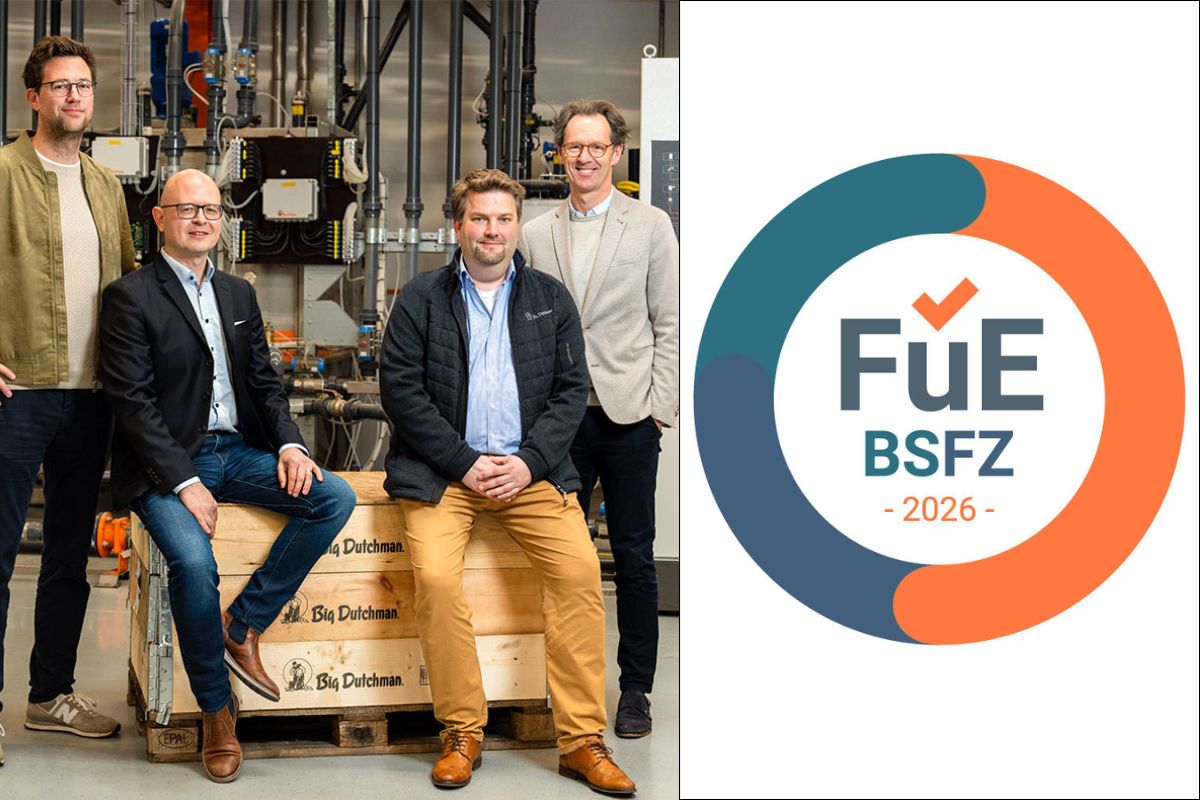
For around two and a half years, Dr Alexander Stärk, Alexander Neumann and Dr Ernesto Morales Kluge from the Business Development team, together with Managing Director Christian Blümlein, familiarised themselves with the subject matter, studied the extensive list of criteria and compiled the required data and documents.
Now their work has been rewarded with success: the federal ministry officially recognised Big Dutchman’s research from 2021 to 2023 as eligible for funding and has awarded a seal of approval for the company’s R&D work!
“A big thank you goes to Alexander Neumann, Alexander Stärk and Ernesto Kluge, as well as to our colleagues in the research teams. Their meticulously documented work was instrumental in us being awarded the seal and now being able to look forward to research support,” says Christian Blümlein.
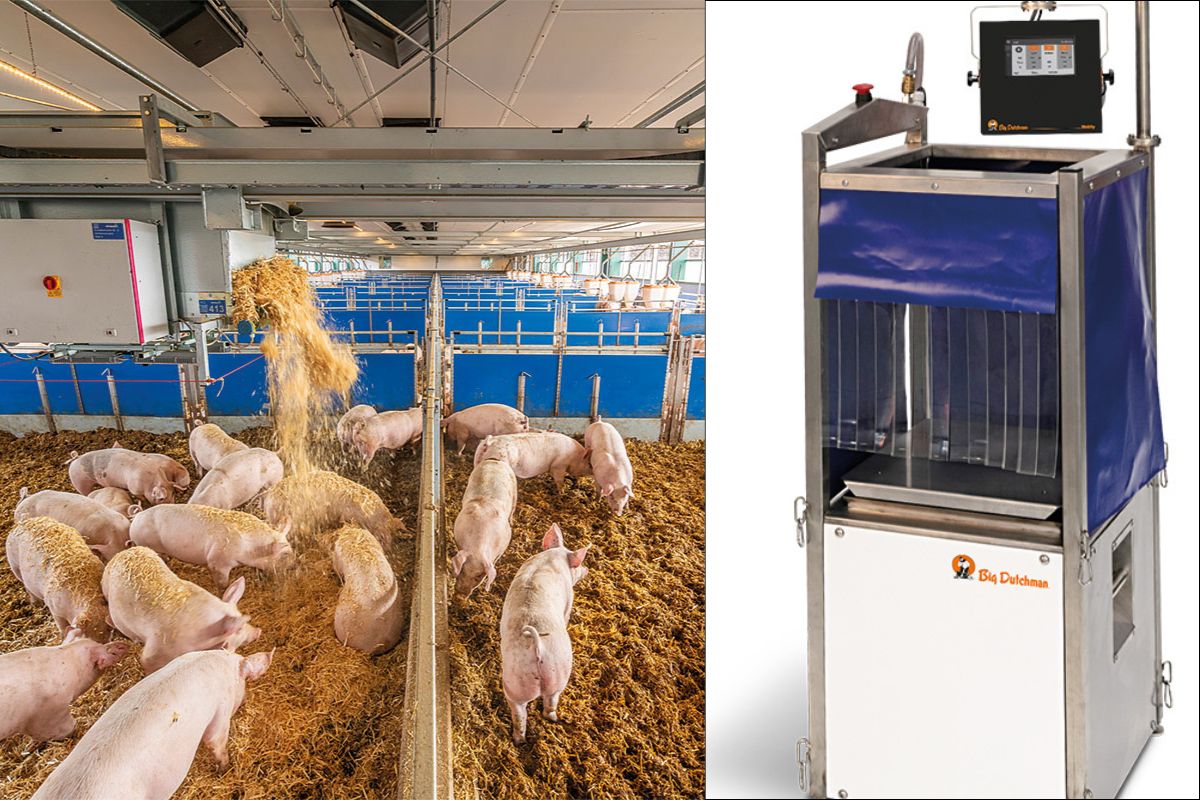
In addition to VIM, the laser-based bird scanner, the eleven research projects have been the foundation for products such as a mobile bird grader, Heidy, and Xaletto, the future-oriented straw bedding concept for piglet rearing and pig finishing.
Of course, not every research project ultimately leads to a new product. The possibility of failing or having to scrap an idea is part and parcel of research and development.
How does an R&D project come about?
“The Business Development team brings customer requirements into the organisation,” says Alexander. “Next, our Engineering team explores what the new product might look like. If it proves to be feasible, we move on to the design phase.”
There is one thing that almost all customer requests currently have in common: “Everyone wants to achieve a high level of automation to replace manual labour and collect data that can be used to manage farms more efficiently,” says Alexander.
That is also the goal of Seng Choon Farm in Singapore, where the VIM prototype for the feed cart is currently being tested. Even on this large-scale farm with 800,000 hens, the farm manager still has to make regular rounds to check on the birds. VIM does this job in a matter of minutes, four times a day. “If a hen hasn’t changed position after four scans, we assume that something is wrong – and VIM sounds an alarm,” explains Alexander.
Together with the colleagues from Malaysia, the prototype’s installation went smoothly. “Transferring knowledge to the regions is key to a wider market launch,” Alexander emphasises. Now the last software bugs need to be ironed out. The final step involves transmitting the data to the BigFarmNet cloud. Such data packages provide farm managers with valuable insights and can be used, for example, for mortality studies.